
Beginner FPV Drone Kits: Ultimate Starter Guide 2025
Drones, or Unmanned Aerial Vehicles (UAVs), are remotely piloted aircraft systems revolutionizing industries and hobbies alike. Unlike traditional radio-controlled aircraft, modern drones integrate advanced technologies:
Gyroscopic Stabilization: 6-axis IMU sensors enabling stable hover
GPS/GLONASS Positioning: Precision navigation and return-to-home functions
Modular Design: Interchangeable components like cameras and batteries
Autonomous Capabilities: Waypoint navigation and obstacle avoidance
From agricultural monitoring to cinematic videography, drones have evolved into indispensable tools. The global drone market is projected to reach $54.6 billion by 2030, with recreational applications driving 38% of this growth.
FPV Drones: The Immersive Flight Experience
First-Person View (FPV) drones represent a quantum leap in pilot engagement. Unlike conventional line-of-sight drones, FPV systems provide:
Real-Time Video Transmission: Low-latency analog or digital feeds (e.g., DJI O3, Walksnail)
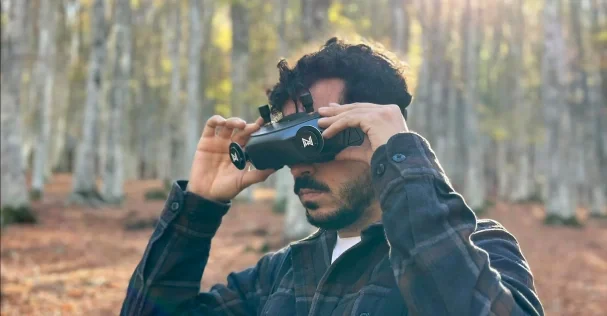
Head-Mounted Displays: Goggles creating 110°+ field-of-view immersion
High-Agility Frames: Lightweight carbon fiber builds (2-7″) for acrobatic maneuvers
Customizable Flight Controllers: Betaflight/INAV firmware for performance tuning
FPV transforms operators into virtual pilots, with latency under 30ms, creating the sensation of actual flight. Racing drones can exceed 100mph, while cinematic models execute complex dolly and orbit shots unreachable by traditional drones.
Selecting Your First FPV Kit: Critical Considerations
Kit Components Breakdown
| Component | Beginner Recommendation | Purpose | |———–|————————-|———| | Drone Type | RTF (Ready-to-Fly) 3-5″ quad | Balanced stability/agility | | Transmitter | Radiomaster Boxer (ELRS) | Future-proof protocol | | Goggles | HD module | Upgrade path to digital | | Batteries | 4S 1500mAh LiPo (≥2) | Optimal power-to-weight |
Performance Specifications
Camera: 1200TVL minimum for clear orientation
Frame Durability: 4mm carbon fiber arms with replaceable parts
Motor KV: 2300-2600 for 4S batteries (ideal thrust
Flight Time: 5-8 minutes (prioritize durability over duration)
Learning Curve Management
Start with angle/horizon mode before progressing to acro
Utilize simulators like Velocidrone (20+ hours recommended)
Choose kits with turtle mode for easy crash recovery
Prioritize CE/FCC-certified systems to ensure signal reliability
Practical Applications of FPV Systems
Professional Domains
Industrial Inspection: Wind turbine and pipeline surveys
Search & Rescue: Thermal imaging in obstructed terrain
Precision Agriculture: Crop health mapping with multispectral sensors
Recreational & Creative Uses
Racing Competitions: MultiGP leagues with obstacle courses
Cinematography: Dynamic chase sequences for film production
Freestyle: YouTube content creation (e.g., parkour tracking)
Geographic Exploration: Cave systems and volcanic monitoring
Emerging applications include drone light shows and FPV-assisted archaeology, where low-altitude maneuvering reveals hidden structures through topographic contrast.